


 Some people set out to make history;
many others found themselves actively shaping it, often unbothered, or totally
oblivious of it. But a faithful ingredient in a historic feat or moment will be
an extraordinariness of some sort, a defiance of the norm and the presence of
unusual valiance or brilliance. It could be for the good.
Some people set out to make history;
many others found themselves actively shaping it, often unbothered, or totally
oblivious of it. But a faithful ingredient in a historic feat or moment will be
an extraordinariness of some sort, a defiance of the norm and the presence of
unusual valiance or brilliance. It could be for the good.
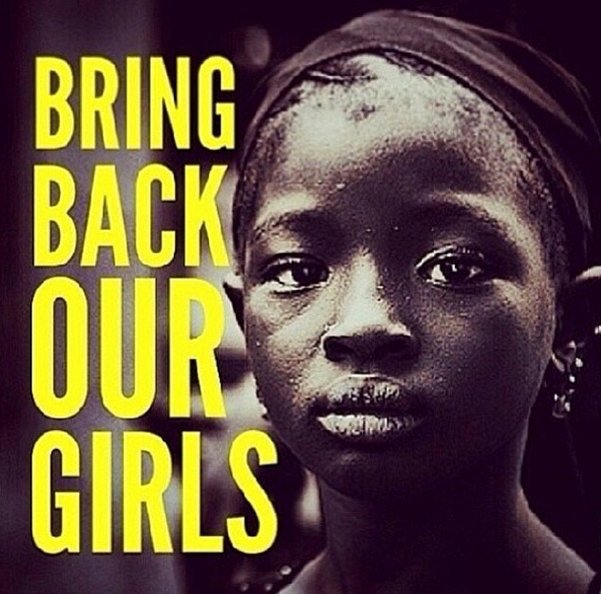
In the case of the viral
#BringBackOurGirls advocacy, the valiance of the women and men who heeded the
call of humanity in the days after the abduction of 276 girls from Government
Day Secondary School, Chibok, Borno State, on 14th April 2014, stood out and
effectively saved the soul of the Nigerian nation from self-immolation.
Yes, we saved the soul of the nation
from smothering its spirit of compassion, through what seems like a state led
disinterest in the suffering of folks whose cries are too far off to force us
to halt. We stood up and stared down the monsters of administrative lethargy
and irresponsiveness, at a time the sociopolitical odds were stacked against
us.
In building an empathy bridge to the
pain of the Chibok Parents and their community, and wearing their shoes of
agony, we found ourselves. We found our why and, decided we were not going to
back down. We found compatriots and comrades the world over. Our cause for the
rescue of the remaining Chibok Girls, after 57 escaped from the abductors,
found allies in the global media. The global media’s persistence also found a
ready ally in us.
We found admirers and won hearts.
Our candor also unleased hatred and cynicisms from many who desperately wanted
the abduction to be untrue, majorly because it hurt their politics or ruffled
their stereotypes. By placing the monstrosity of the abduction side by side
with the viciousness of the Islamic sect, the force of virality was triggered.
The rest, as they say, is history.
Nigeria is a paradox. The sociology
of our society is skewed against the poor and the weak. No one hears you unless
you get rich somehow or get very angry. The parents of our Chibok girls are
rural folks just like the parents of other victims from Buni-Yadi, Guljuba and
Dapchi in Yobe state. If the media had not beam light on their tragedies
and civil society groups not amplify their cries to the public, their
adversities would never have gotten assessed and efforts made at redress. The
success of the BBOG Advocacy was wrapped in fate, humanity and its courage. The
discipline and consistency came later.
The Boko Haram insurgency is
embedded in an extreme socioreligious doctrine that forbids formal education
and attempts to enforce Islam on a multi-religious, but officially secular
state. The first BBOG March of April 30th, 2014 was not a big bang. It
was the culmination of compounded frustrations of many weeks and months, over
government’s ineptitude and tragic incompetence in the handling of the
self-instigated Boko Haram insurgency. It was a calamity foretold.
It was a disaster we dished to
ourselves. A dreaded sect leader was arrested alive and handed over to the
Police and the next time he was seen, his body was riddled with bullets. The
trial of the five alleged killer policemen dragged on for more than six years
before getting thrown out for lack of evidence by the courts, like almost all
high-profile corruption cases in Nigeria.
The gory, brutal and horrific were
becoming our normal and, this was worse in the northeast particularly. Many
schools had been attacked or closed. Scores of teachers and school children had
been gruesomely murdered by the sect. The headquarters of the Nigerian Police
in Abuja had been bombed. The Nigerian UN Office in the same city also turned
up an easy pick for the Boko Haram. Nigeria found herself in the middle of a
suspense movie.
It was like ‘Homeland’ playing out.
Suicide bombers were on the loose on markets, worship centers and motor parks.
The militarization of our roads and cities was full circle. It was like a war
situation. I usually tell the awkward story of my visit to a UN Office in the
sub-region and the insecurity I felt as we go from place to place because of
the absence of heavily armed soldiers and sandbagged check points on the roads
in that country. The constancy of tension across Nigeria had practically
altered my psyche and what I considered safe.
It was a matter of time. Our
threshold was going to snap at some point. Parents were beginning to get
worried. Students were agitated and confused. The diplomatic corps readjusted
their reality from amber to red. Our political leaders were as unnerved as they
were clueless. The executive neither acted on or trust in its own intelligence.
It shamefully became the peddler of conspiracies about the insurgency. The
legislative arm of government was more concerned about personal monetary
enhancements.
Not a single public hearing has been
conducted specifically on the Boko Haram crisis by our National Assembly. Not
one either on the military arms procurement scandals. When they needed to step
up and align with Nigeria, they always choose closed door meeting with the
actors, who later turned out to have raped us blind through the corrupt
diversion of the funds meant to fight the war. I might have to return to the
shameful role of our Government in another article. This one is about the
#BringBackOurGirls Advocacy. It is about its perceived successes and failures.
It is meant to start reflections and inquisitions as the advocacy clocks four
years. This is not a love letter.
IS THE BBOG
ADVOCACY A SUCCESS?
The answer will be a runaway Yes,
within certain parameters. It is a self-validating fact. I will highlight the
reasons. To a great extent, the Chibok Girls abduction could have been swept
under the rug, like so many cases of abductions before it, by a government
desperate for reelection. The BBOG shined the light in a dark room and the muck
and mire became visible. The squalidness of the room appeared, and questions
arose to why they were so, even in the presence of a paid cleaner with all
necessary tools. What I am saying is that someone was on duty and the ship went
adrift. The BBOG group challenged the government’s reckless inaction, complicit
doubt and criminal insincerity.
I am a member of the movement. I was
there from the beginning. I was part of the online outrage and among the
‘sneakers on the ground’ in Abuja. The compassion was real. The anger was
fierce. The sight of all the women standing in the rain with the then Senate
President and Speaker on the very first march on April 30th, 2014 was humbling.
Not one person on that day would have been certain that the advocacy would
still be on four years later.
Despite the hostilities from
government, the movement grew stronger. We rallied together a nation that was
losing the essence of her shared humanity and compassion, the spirit of that
basic mutuality in the experience of tragedy. If only you considered the fact
that the attacks on schools started with a certain Success International
Private School in Maiduguri on July 29th, 2009, it would become clearer to you
how long Boko Haram had been out there burning down our schools and killing our
children.
Six classrooms and one school office
were razed on that day. That was almost 57 months before GSS Chibok abduction
happened. Attacks went on and on. From the very first attack on a school to
Chibok and till date, more than 1,400 schools have been destroyed or closed.
Very few people remembered that
Zanna Mobarti Primary School in Damasak had over 300 children between the ages
of 7-15 years abducted by Boko Haram when the Multinational Joint Task Force
were closing in on them in November 2014. Do you know that hundreds of teachers
had been killed before Chibok? The 2016 Report by Human Rights Watch puts the figure
at over 2000. Do you know that hundreds of innocent young girls from
communities were taken before Chibok? Where was the outrage? Where were the
sustained cries of the people so oppressed?
How far did our NASS proceed with
the motions of urgent national importance? What happened to the Governors and
elected officials of the region? They all chose politics except for one that
was later removed by the Government of the day, over a petition that made both
credible and fantastic claims.
BBOG restored our voices and
empathy. The movement’s Daily Sitout provided the balm for our injured nation.
Indigenes of the states in the northeast and Nigerians found a place where they
could ventilate in the Unity Fountain. No normal day ends without tears and
wailings.
The advocacy was a revolution been
televised to some and being lived by others. To the extent that we restored the
humanity of our nation, in spite of the jeers and sneers of the naysayers; to
the extent that we forced an initially lethargic and doubtful government into
action, whereby it started reaching out through multiple parties for a
negotiated release even if unsuccessful; to the extent that we kept the issue
of the abductions alive through one administration to the other, consequently
leading to the return of 107 out of our 219 daughters held in captivity; and,
to the extent that the light of the advocacy was a contributory factor to the
electoral defeat of the administration that supervised the abduction, the
#BringBackOurGirls advocacy succeeded.
But was that all that was possible
or that we could have done? The answer to this question leads automatically to
the next phase of my writing.
COULD THE
BBOG HAVE ACHIEVED MORE? WHAT STOPPED THE MOVEMENT?
Despite our successes, the
conversation about the scale of what the BBOG could have achieved, when the
lights were turned on, is yet to cease. It still goes on when activists sit
together locally and internationally. There have been many academic inquisitions
into the movement. There are valid opinions and misconceptions about our
approach and style of engagement, that seems to isolate friends and family
alike. There are hardline haters as well, who are incapable of accepting the
good and positive about a revolutionary advocacy.
One critical sentiment I have
encountered are those that see our Movement as antagonistic and, downright
belligerent. Some people kind of get the feeling that we would start a mass
brawl at a funeral, damning the solemnity. A lot of folks wonder if we wanted
more than the girls. And, that goes to the heart of a controversial concept
within the movement on where we should be; stand at the door or sit at the
table. It is a metaphorical inference to confrontation or collaboration.
At what point in civil activism and
advocacy should one fold up and leave or evolved? At what point should
persistence be the only strategy? At what point should messaging change? At
what point is tactical reinvention non-negotiable? At what point does street protests
become a nuisance? If messaging is important, what about language? You can be
sure there is no single answer to all of these.
Many other people also think that
our apolitical claim is a song we sing but don’t dance to. We are perceived as
having a grudge fight with the government and identifying with everything that
makes it look bad, thereby blurring the lines of our advocacy. Some of the
folks who work for the present government, like their predecessors, think that
we are in bed with the opposition, or see us as the new rallying army of the
mystical third force. No matter where one swings here, it is hard to wean
people off selective perception, especially when the trigger is personal.
This applies both ways, to the
movement and the critics. I have met some parents of our Chibok Girls who
resolutely affirm that they do not want the government to forget their children
in captivity, but also do not want to appear adversarial. They believed that no
one else can get their daughters back, and they are right. It is the reason why
some don’t like identifying publicly with us, even with their unreserved
admiration.
Another perception is that our vow
of singularity of purpose is myopic and self-serving. It is usually backed with
the repulsion a capitalist feels towards an investor who is served with China
on a platter but goes for Bangladesh instead. What I mean here is the fact that
we are perceived to have been presented with the opportunity window to lead and
drive the changes that Nigeria deserves aftermath of the 2014 abductions. If
you widen the connected issues, you will walk into the space of social
development, security reforms and public accountability.
Why is our military unable to end
the insurgency despite the massive growth of the security budgets over the
years? With the humongous expenditure, why do we struggle to adequately cater
for the welfare of the lower rungs of the military? How do we treat the
families of our fallen heroes from this war? What are we doing as a nation to
address the terrible yet growing inequality in the country? How can we
depopulate the recruitment line of Boko Haram through job creations or social
security? Why is corruption in the military treated with kid gloves?
Who is being prosecuted for corrupt
enrichment in the many reports of ghost soldiers and policemen in the forces?
What about the arms procurement scandals? The underlying fact of this is that
we have lost too many innocent lives and soldiers defending our country, not to
ask questions. And, I must say that we have been asking these questions. The
point now is the manner and approach. Are we compelling enough? Are we
strategic enough? Are we pressing the right buttons?
If you deepen the issues around the
Chibok abductions, you will be effectively faced with the state of education,
in quantitative and qualitative terms and, the hostilities the girl child faces
in the north of Nigeria. Where is the plan to reform a society that permit 13
years old girls to be married off? Is the Safe School Initiative enough to plot
our way out of the precarity we have created for schools in the north? What is
the state of its implementation?
Talking about the poor indices from
the northeast and northwest will be a rehash of the obvious. What is the plan
to raise enrolments? What is the plan to secure existing schools? I have been
to schools in southern Borno where teachers come armed to the class, just so
they could protect the pupils and prevent possible abductions. A friend accused
us in the BBOG as partly to blame for the Dapchi abduction because we were
fixated on the Chibok Girls and not raising enough dust on the porosity of
security around schools in the region.
Some people think we should have led
the establishment of a security protocol for boarding schools in the country.
They are not wrong. But it is not that uncomplicated.
Still on the singularity thingy,
many people I have encountered think it is an insensitive posture to adopt,
considering the scale of our complex emergency in the northeast. In the region,
a lot of people and victims of the conflict, see our advocacy as insensitively
obsessive about the return of the Chibok Girls, when there were over two
million internally displaced persons, many thousands of traumatized widows,
tens of thousands of orphaned children, prolonged lack of access to basic
education and a raging acute food insecurity to complete the nightmare.
AND WHAT
NOW?
Someone once asked me why we were so
angry without a plan. The truth is that we HAD a Plan. Though, the ship has
long sailed off on the fundamentals of that plan, I can attest confidently to
the fact that the plan was neither The Third Force nor The Red Card. It was
called the BBOG Strategic Plan. At least, for the Abuja movement.
We disagreed internally on many
things, but not on one key issue; zero political posturing. We were not to
bring the toxic politics of the polity into the movement. We were not to wear
political hats when we are on our saddle. We believed political coloring drowns
advocacy purposes in non-political causes. I think we did well initially. Some
people argue now that these are not normal times. But my take is that we have
braved worse seasons. Voices from within also called for us to pursue other
connected causes, but we resolved to stick to a singular purpose, which was the
rescue or safe return of our Chibok Girls. How well that served our cause or
providence is debatable.
Along with two friends, I took up
interest in the plight of IDPs with vigor. And, a lot of other people were
encouraged to pursue their causes. There are members of the movement working
with Almajiris, Women, Youths and Entrepreneurs. Some advocate for Girl Child
causes, some are fighting to fix Gender Based Violence and redress our poor
Gender Parity across sectors. Another friend has been working in the education
sector and some have pushed the frontiers of the state to develop a Missing
Persons Register. We have not done badly. I have friends who felt we lacked the
muscles to drive the connected issues. But, I know too well that you grow when
you stick to it. Then, the world would take note.
We disagreed also on whether we
should open the movement up to receive external funding, but the nays had it. I
was a ‘nay’. The external environment was too toxic then. Mudslinging was a
popular sport for the political jobbers. It still is. We would also have been
required to register as a non-governmental organization, create a formal
structure and codify certain rules into a constitution, propositions which
could not win with most of us.
We felt that could easily play us
into the hands of a hostile government. We however registered the Trademarks.
Another combustible issue we had to deal with was our language and messaging.
We strived to control our narratives by pulling down abusive and unconnected
placard messages during our marches and protests. We were sure of our mission.
It was not about the President. It was about the insurgency and the abduction.
On language, it was made clear to all never to call the President names and
mouth insults.
Civility was an obligation imposed
on every speaker at the Sitout. It was not totally successful. So, we created a
set of Core Values acronymized into HUMANITEEDS. The process to this point was
as good as the culture it birth, for a while.
The decision-making process in the
movement was the biggest elephant in the room. Writing about it would take a
book. I might give it a shot in the future. The evolution of that process was
topsy-turvy. Sometimes, it was a smooth sail. At other times, it was
acrimonious. I think it is a challenge many organizations or coalitions face. I
was convinced that the Government of the day, at the time, hated us and
desperately wanted to crush us. They rented crowds.
They deployed the Police.
Ironically, they also deployed thugs to unleash violence on us. The animosity
was palpable. But the animosity within the movement was fiercer. Distrust was
rampant. It is a reason why the numbers have dwindled, if you were ever
wondering. People were hurt. Sensibilities were offended. Egos were bruised.
Some people are still in their trenches, while others have moved on. It could
be an epic on how not to lead a movement. The sunny side to all these are the
lessons we have learnt and are still learning. Only few MBA programs could be
so impactful.
If this fourth-year introspection
forces many to write and share their views, the world of active citizens would
be blessed, and advocacy groups would be enriched. Many others would learn the
paths that should see less travels, how not to do some stuffs and vice versa. The
crowning glory of every protest and advocacy must be to succeed in changing a
culture that is no longer fit for an age; to force new conversations and
actions and puncture the bubbles political leaders live in; to amend unfriendly
or unjust laws so that a generation coming, or present will be free from the
shackles of an oppressive system, and to effect change.
The ‘Violence Against Persons’ law
was the crowning glory for a collaborative few who persisted. The ‘Not Too
Young To Run Bill’ is a great outcome for an adorable group who shook off the
shackles of oppression. The Nigerian Senate Public Hearing on the Migrants
Crisis in our backyard is also a fruit of a well channeled anger. If activism
fail to yield change, we may need to call Mama Winnie to give us a sign for
what to do with it.
OLATUNJI ‘LANRE-BARUWA
+2348092000444
@ola2njee
Ola2njee@live.com


No comments:
Post a Comment